The Science of Juicy Chicken: Types of Marination and How it Works
Anyone who has prepped, served or enjoyed chicken knows that moisture is key, and that means proper marination. While some foodservice kitchens choose to handle it in-house, it’s common for chicken processors to marinate their products, utilizing a couple of surefire ways to create perfectly juicy chicken.
Defining Marination
A marinade (or brine) for chicken usually includes a mix of water, salt, sometimes phosphates for moisture retention, and key ingredients for flavor, like herbs and spices. This combination adds the necessary moisture to create longer hold times, stronger coating adhesion and an overall better eating experience.
Marination Methods
Traditional soak-marination is common in some restaurant kitchens. But when menu-makers want a ready-to-go ingredient, chicken processors often use two main methods for marinating: needle pressing & injection, and vacuum tumbling.
Needle Pressing & Injection
Needle pressing uses solid needles that press through the skin and into the protein. This opens up the muscle structure, making room for the brine. Needle pressing is also often used for opening up the membrane of skin-side filets to help coatings stick better to the smooth surface. Then, hollow needles inject the brining solution directly into the muscle fiber of the product.
Vacuum Tumbling
Vacuum tumbling is exactly what it sounds like: the chicken is constantly rolled in marinade in a tumbler that has had all air removed. Compared to traditional soak-marination, the tumbling reduces the amount of marination needed, while the absence of air pulls the marination deep into the muscle fibers.
This process also saves time compared to soak-marination while creating more consistent moisture throughout the chicken.
Two-in-One Method
Sometimes, for the best outcome, chicken processors can use both methods for the same product. By first needle-pressing, then vacuum tumbling, a single SKU can have optimal moisture and flavor, inside and out.

How Marination Affects Breading
There’s a strong correlation between how well chicken is marinated and how the breading behaves.
- Proper Marination: Well-marinated chicken is your best bet at having the breading secured to the surface.
- Too Little Marination: Without adequate marination, it’s difficult to get a coating to stick well enough.
- Too Much Marination: An excess of marination almost always means a soggier breading.
- Uneven Marination: If marinade pools in one spot, the coating tends to fall off in the dryer areas.
The Benefits of Well-Marinated Chicken
Extended Hold Time: Juicy chicken has a naturally longer hold time under heat lamps or in a hot case as it won’t dry out as quickly.
Consistent Flavor: A brine with herbs and spices that’s been evenly injected into the chicken means the consumer will get the same taste and juiciness from bite to bite.
Tip: Train your staff to pull chicken at about 155–160°F so it hits the USDA guideline of 165°F after carryover cooking, instead of pulling at 165°F and letting it dry out as the temperature reaches 175°F.
The Right People = The Right Marination
Marination is incredibly important when serving chicken, but it can take a lot of skill and experience to get it right every time. For foodservice operators, leaving it to chicken processors can save precious time, training, and prep space while ensuring even juiciness in every product.
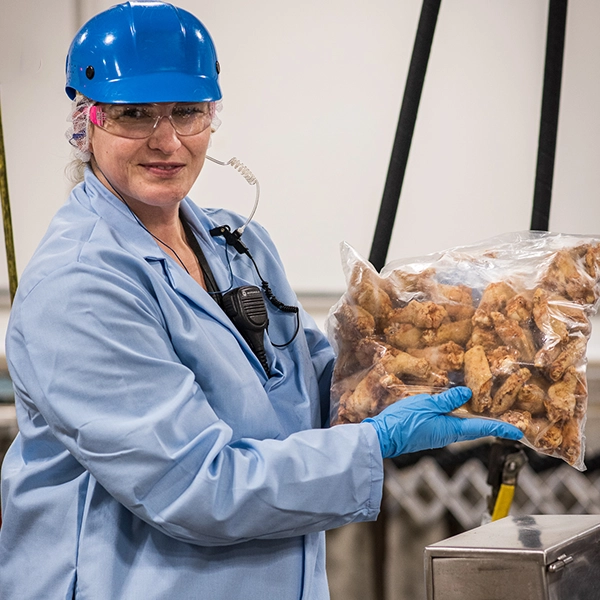
We’ve discovered that, along with our specialized equipment, our long-tenured employees make all the difference. These specialists are pros at everything from building the formulas to calibrating volumes to making adjustments on the fly.
Our teams can even fine-tune methods and ingredients for specific products, like when creating our Inferno Wings which have a precise amount of tangy-heat spread throughout the muscle of each wing.
Have any questions about chicken marination? Reach out below!